
In Martinique, “prefab home” turns up in nearly every construction search — and the word answers exactly one question: where the structure was built. What's left to do on the plot once the truck has driven off depends on what actually arrives, and no one spells that out before you sign. This dossier walks through the four cases the word covers, and what each one changes for the timeline, the budget and who answers for what.
Feature · August 2026
Back to the blog

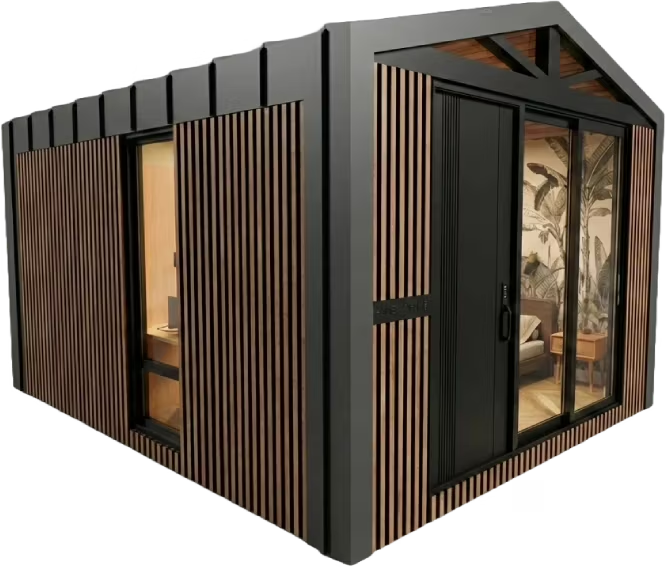
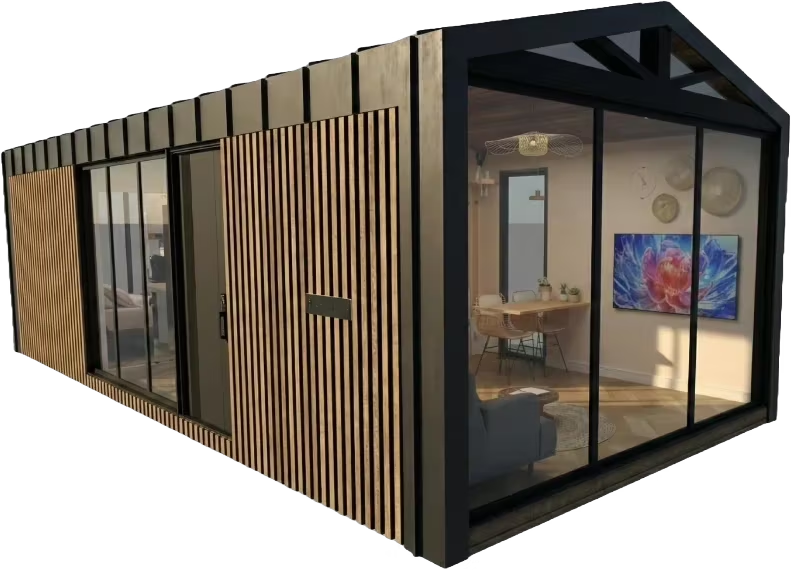
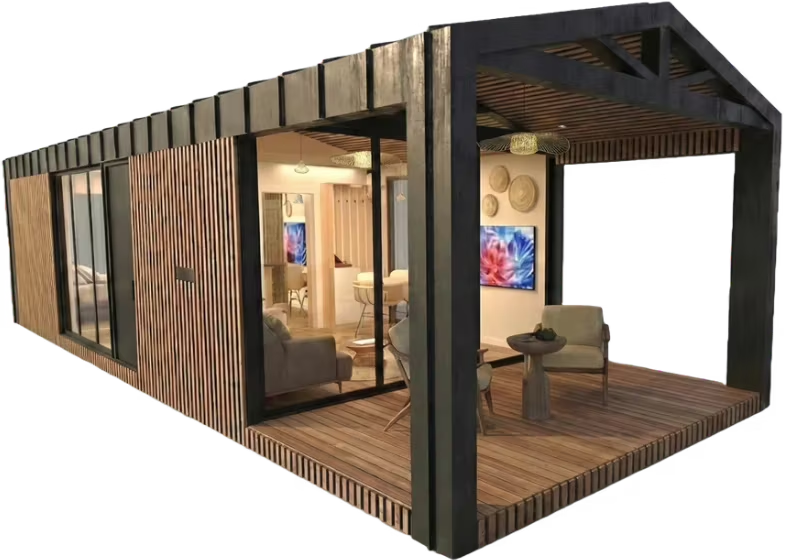
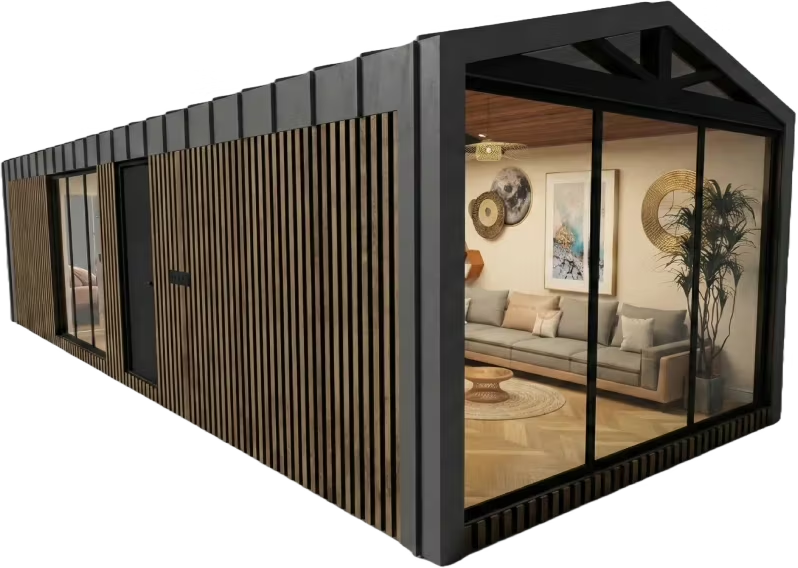
HORIZON T projection — the interior on delivery day. No actual delivery is depicted.
“Prefab home” in Martinique. The word tells you where it's made. Not what's left to do.
I · The word A manufacturing method. Not a site plan.
“Prefab home” describes a method: some or all of the structure is built away from the plot, then shipped to it. The word tells you where it was made; it says nothing about how many pieces arrive, or who's responsible for putting them together.
The same word covers panels still to be assembled, precast concrete elements, volumes that need connecting to one another, and habitats that arrive finished. The only thing they share is the factory. Everything else — assembly, who's involved, lead time — changes from one product to the next.
The question that actually matters isn't where it was built, but what will be left to do on the plot, by whom, and for how long. Home Kit Home sets out its range of habitats delivered equipped, see the habitats page.
II · The site work Count the contractors before you sign.
The same word covers four different ways of arriving on a plot. The more steps a method leaves to complete on site, the longer the plot stays an active worksite — and the more contractors there are to coordinate and checkpoints to clear before the job is signed off.
Panels that need assembling call for a crew on site, followed by a separate visit for each trade that closes behind it — weatherproofing, interior fit-out, finishes. Each one is another contractor, another stretch of time with the plot as an open worksite.
Precast concrete elements require a full structural build in their own right — pouring, curing, assembly — before the dwelling itself even begins. The plot stays occupied from the first pour to the last connection.
Volumes that need connecting to one another add a step neither of the previous two has: the junction itself, checked point by point — structure, utilities, weatherproofing at every connection — before the whole thing behaves like a single building.
A habitat that arrives finished closes this chapter in a single step: setting it down. What's left on the plot at that point no longer concerns assembling the home itself, but the items that exist whatever product is chosen — foundations and utility connections.
III · Delivery The truck drives off. The habitat stays finished.
At Home Kit Home, the habitat arrives as a single finished block: no assembly takes place on site, no elements to put together, no finishing work left to redo on the plot.
Once the module is loaded, everything that happens before it reaches the plot — sea transit, customs formalities, octroi de mer, transport from the port to the site, crane installation — is handled by the freight forwarder, not the client.

IV · The workshop What leaves the workshop doesn't get redone on site.
Joinery, interior fit-out and finishes are all completed in the workshop; the habitat ships fully equipped.
The range offers four finishes: Zénith and Pinède in aluminium louvre cladding, 50 mm slats with a 15 mm gap, in a brown tone; Pure and Linéa in smooth white panels. The cladding is aluminium throughout, finished with fluorocarbon paint, over a galvanised steel structure.
Comfort, durability, CE compliance, electrical safety, insulation: the specification comes from Europe, and it's already satisfied before the module ships. Partner lines in Asia do the building, under Home Kit Home's direct supervision and its own plans — nothing left to settle once the habitat lands on the plot.
The range spans the ESSENCE (20 m²), ESSENCE+ (20 m²), HORIZON (36 m²), HORIZON T (46 m²), SIGNATURE (46 m²) and SIGNATURE DUO models. The projects Home Kit Home currently has at the feasibility stage remain in Guadeloupe — see the current project files.
What's finished in the workshop won't become a building site on your land.
V · Responsibilities The module changes hands. The plot doesn't.
Home Kit Home sells the module and its delivery to the plot; everything else belongs to the client. Foundations on pilings, structural fastening, utility connections, permits and administrative steps are contracted and paid for directly by the client, with local companies — Home Kit Home can present and estimate these for guidance, but never contracts or invoices them.
The companies working on site carry their own insurance; Charlemagne Groupe supports the credit side and the construction guarantees — the ten-year warranty of the companies involved, and the client's own damage insurance (dommages-ouvrage).
VI · The budget A dated price. Everything else is costed in the quote.
In Martinique, a Home Kit Home habitat delivered equipped ranges from €74,447 (ESSENCE, 20 m²) to €141,966** (SIGNATURE, 46 m²), price as of 27 July 2026 (see the current rate on the habitats page). The price includes transport, customs and octroi de mer. What stays with the client are the items on the plot: foundations on pilings, connections and permits. The timeline runs to six months, sometimes less, from the first conversation to the handover of keys (the detailed timeline is set out in our dossier on construction time).
** Starting price, all taxes included, for standard delivery. The final amount varies according to site accessibility, transport and installation conditions — costed in the quote.
In the overseas departments (Guadeloupe, Martinique, French Guiana), the overseas tax credit may apply depending on the project and its intended use; you remain 100% owner. Financing runs through Charlemagne Groupe (see how financing is prepared). Indicative estimate, to be confirmed with our specialist partner: every case has its own specifics.
How many pieces, who assembles them, how long the plot stays active: those are the answers that decide the budget and the timeline — never the word used to sell the product. They get checked project by project, ahead of any quote — talking to Home Kit Home is how to get them before you sign.
Frequently asked questions
How much does a prefab home cost in Martinique?
Price alone tells you nothing until you know what it includes and what it leaves for you to arrange. At Home Kit Home, the habitat delivered equipped includes the joinery, interior fit-out and finishes completed in the workshop; what stays with the client directly are the foundations, the utility connections and the administrative steps.
Do you have to assemble a prefab home yourself?
That depends entirely on the product: some arrive as parts that still need assembling, others as a single finished block. A Home Kit Home habitat arrives finished: there's no assembly on the plot. What remains are the foundations on pilings, structural fastening and connections, carried out by local companies appointed by the client.
How long does the plot stay a construction site?
That's the question the word can't answer, and it depends on what arrives: parts that need assembling open an assembly worksite on the plot; a habitat that arrives finished opens none. What remains in every case are the foundations on pilings and the connections, carried out by local companies appointed by the client.
What should you ask a seller before signing?
Three verifiable things: how many pieces the product arrives in, what's already finished inside at the moment of delivery, and who contracts each of the items carried out on the plot. The answers are found in the product's documentation, not in the word used to describe it.